Corridor read
Top 5 Waterfalls
Waterfalls have always fascinated me, whether they are tiny streams cascading gently over a handful of rocks or enormous rivers crashing down from great heights. I have never had any desire to experience a waterfall from inside a barrel, though. I am much happier appreciating their beauty and raw power safely from solid ground.
Eliana Kingsley
Temple note
Layer tip
The full corridor digest continues below along soft meter ticks.
Path
Temple Corridor
Waterfalls have always fascinated me, whether they are tiny streams cascading gently over a handful of rocks or enormous rivers crashing down from great heights. I have never had any desire to experience a waterfall from inside a barrel, though. I am much happier appreciating their beauty and raw power safely from solid ground.
Usually, a waterfall is the destination that gives one of my hikes its purpose, although occasionally I come across an impressive one right beside a road. These are the waterfalls that have left the strongest impression on me.
#1 Iguazú Falls (Argentina / Brazil)
Iguazú Falls, located along the border between Argentina and Brazil, is in a league of its own. It is taller than Niagara Falls and broader than Victoria Falls, making it an extraordinary natural spectacle.
My walk through the jungle in Iguazú National Park was filled with memorable sights even before I reached the main attraction. Along the trail, I encountered abundant birdlife, clouds of butterflies, the occasional coati wandering through the forest, and walkways suspended above the powerful Iguazú River.
The true centerpiece, of course, is the collection of 275 separate cascades that make up Iguazú Falls. Together, they create an unforgettable scene. The most spectacular section is Devil’s Throat, a massive horseshoe-shaped waterfall that plunges 269 feet into the river below. Its deafening roar reached me well before the waterfall itself came into view.
Eleanor Roosevelt is famously said to have remarked, “Poor Niagara,” after seeing Iguazú. After experiencing the falls myself, I could certainly understand the sentiment. Even one of the world's most famous waterfalls seems less overwhelming beside the extraordinary force of Iguazú.
#2 Gullfoss (Iceland)
Iceland's best-known waterfall offers something like two waterfalls in one. Gullfoss, whose name means “Golden Falls,” can take on a golden appearance when sunlight reaches its rushing water.
Unfortunately, the day I visited was completely cloudy, so I missed out on the golden effect. That hardly mattered, though, because the waterfall itself was still spectacular.
The Hvítá River plunges into a 105-foot-deep gorge in two distinct stages. The first cascade falls approximately 36 feet, followed by a second drop of around 69 feet. From certain viewpoints, the gorge cannot be seen at all, creating the remarkable illusion that the water simply disappears into the ground.
The dramatic scenery is accompanied by an equally compelling story. According to a popular legend, a woman walked from Gullfoss all the way to Iceland's capital and threatened to throw herself into the waterfall if it were sold to foreign investors who intended to develop it for hydroelectric power. Her actions supposedly helped stop the sale.
The actual circumstances were less romantic. The investors apparently lacked the financial resources needed to carry out their plans. Today, Gullfoss remains protected, allowing visitors to enjoy this remarkable Icelandic landmark.
#3 Niagara Falls (New York / Ontario)
Few waterfalls inspire as many familiar images and stories as Niagara Falls. Honeymooners, Napoleon's brother, tightrope performers, Marilyn Monroe, barrels, the Maid of the Mist, the falls freezing in 1911, and the famous temporary shutdown in 1969 have all become part of Niagara's history and mythology.
Still, nothing prepared me for the experience of seeing Niagara's three major waterfalls in person: Horseshoe Falls, American Falls, and Bridal Veil Falls.
From the top of the Skylon Tower on the Canadian side, I had an expansive view across the waterfalls, the Niagara River that supplies them, and Goat Island, which divides the falls.
At ground level on the American side, I was able to appreciate the enormous volume and force of the water just before it plunged over the edge. Then, aboard the Maid of the Mist, I was thankful for the protective rain gear as the boat moved toward the bottom of the falls and the surrounding spray became increasingly intense.
Experiencing Niagara from all three perspectives gave me a much better understanding of why people have been drawn here for generations. Perhaps Niagara isn't so poor after all, Mrs. Roosevelt.
#4 Victoria Falls (Zimbabwe / Zambia)
A visit to Victoria Falls, situated along the border of Zimbabwe and Zambia, can be dramatically different depending on the season.
During the sub-Saharan summer, water levels are lower. This means visitors can enjoy clearer views of the waterfall and surrounding gorge, but they do not experience the full force of the falling water.
I visited during winter, when the Zambezi River is flowing at much greater strength. The trade-off is that enormous quantities of mist obscure many of the views. Calling it “mist” can actually be misleading, because in certain places the spray comes down with enough force to leave you completely drenched.
The ideal solution, naturally, would be to visit during both seasons.
Victoria Falls is fed by the Zambezi River and extends for approximately 5,600 feet, with a drop of 354 feet. Those figures mean it is neither the world's tallest nor its widest waterfall individually. When width and height are considered together, however, Victoria Falls earns the distinction of being the world's largest waterfall.
Its traditional Tonga name, Mosi-oa-Tunya, meaning “The Smoke That Thunders,” is remarkably appropriate. The enormous cloud of spray can be seen from an airplane while approaching the town from miles away. During winter, the thunderous sound of the falls along the clifftop trail is so powerful that it can easily overpower the noise of six tour helicopters circling overhead.
The walking trail contains 16 separate branches leading to viewpoints, each revealing another perspective of the constantly changing waterfall. Along the route are Devil's Cataract, Cataract Island, the Main Falls, and Livingstone Island.
Near the end of the trail, Danger Point offers impressive views toward Horseshoe Falls, Rainbow Falls, and Eastern Cataract, assuming the spray is not so heavy that it blocks the scenery and soaks you.
Rainbows seem to appear almost continuously, creating vivid bands of color against the white water and clouds of mist. The surrounding area also provides opportunities to spot red-winged starlings, groups of warthogs, and remarkably fearless vervet monkeys.
#5 Veliki Slap (Croatia)
A public bus from Zagreb took roughly two hours to reach the area directly across the road from the entrance to Plitvička Jezera, also known as Plitvice Lakes National Park.
Covering 73,000 acres, the park is the largest national park in Croatia and was established in 1949, making it the country's oldest national park as well. Its pristine landscape contains 16 interconnected lakes displaying remarkable shades of azure, turquoise, green, blue, and gray.
Wooden bridges and raised boardwalks weave through the park, while the sounds of croaking frogs and numerous waterfalls fill the surrounding forest.
The most impressive waterfall was also the first one I encountered. Only a few minutes into my five-hour hike, I came across Veliki Slap, meaning “Large Waterfall.”
The waterfall plunges 255 feet into an exceptionally vivid turquoise pool below. Framed by rocky formations and dense forest, Veliki Slap made an extraordinary first impression and served as a spectacular introduction to one of the most beautiful national parks I have ever visited.
More along this corridor
MID · en

Top 5 Best Off-Road Motorcycles
Riding off-road isn’t just about speed—it’s about freedom, adrenaline, and the thrill of exploring untamed trails. From steep rocky climbs to sandy paths, the right motorcycle transforms the experience. Picking the perfect bike depends on your style, skills, and terrain. Here’s a look at five standout models and the essentials to consider before your next adventure.
MID · en
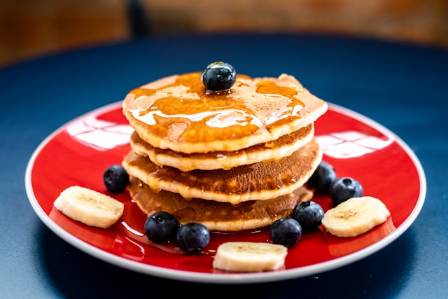
The Ultimate Pancake Showdown: Testing 6 Celebrity Recipes to Find the Best
Pancakes are the definitive breakfast staple. They are straightforward enough for a Tuesday morning, yet special enough to anchor a holiday brunch. While supermarket mixes and frozen options exist, they pale in comparison to a fresh pancake boasting crispy edges and a tender center, served straight from the griddle.
MID · en

2025 Beverage Trends: Wellness, Innovation, and Consumer-Centric Shifts
The beverage industry evolves rapidly to align with changing consumer preferences, and 2025 builds on 2024’s momentum by refining, expanding, and elevating last year’s breakthrough trends. This year’s landscape is defined by a deeper focus on wellness, adventurous flavors, and interactive experiences, driven by shifting health priorities, cultural curiosity, and media influence. Below, we unpack the key drivers behind 2025’s beverage trends and the six movements set to dominate the market.
MID · en
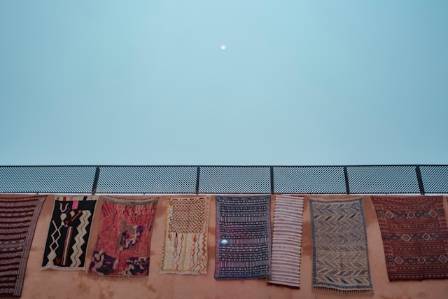
Van Gogh Starry Night Woven Tapestry
One of Vincent van Gogh’s most celebrated masterpieces has been beautifully recreated as an elegant woven wall tapestry. The intricate textile construction highlights the swirling stars, luminous moon, and dynamic movement of the famous night sky, bringing new depth and texture to this iconic artwork.
MID · en

When was the very first robotic arm invented?
In the early stages of developing the mechanical arm, the word “robot” was intentionally avoided.
MID · en
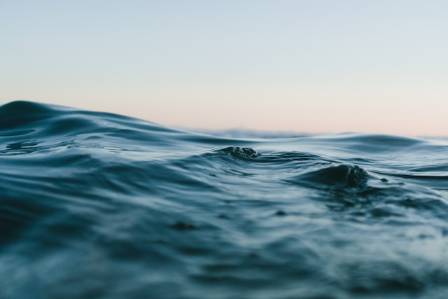
Why does the ocean have waves?
The ocean is constantly in motion. Whether you are standing along the shoreline or watching from a vessel offshore, waves are an ever-present feature of the sea. These moving patterns are created when energy travels through water, causing particles to move in a circular pattern.