Corridor read
When Do Locust Trees Bloom? And What to Expect
The phrase “locust tree” is commonly used to describe two different species: the Black Locust (Robinia pseudoacacia) and the Honeylocust (Gleditsia triacanthos). Although both belong to the legume (Fabaceae) family, their flowering characteristics are quite different, which often causes confusion. This overview explains when these trees bloom and what their short-lived flowering period looks like.
Evander Cross
Temple note
Layer tip
The full corridor digest continues below along soft meter ticks.
Path
Temple Corridor
The phrase “locust tree” is commonly used to describe two different species: the Black Locust (Robinia pseudoacacia) and the Honeylocust (Gleditsia triacanthos). Although both belong to the legume (Fabaceae) family, their flowering characteristics are quite different, which often causes confusion. This overview explains when these trees bloom and what their short-lived flowering period looks like.
Seasonal Bloom Timing
The blooming period of locust trees is not fixed to a specific date on the calendar. Instead, it depends heavily on regional climate conditions and seasonal temperature patterns.
For the Black Locust, flowering usually occurs from late spring into early summer. In many areas, this typically falls between mid-May and early June. However, warmer southern climates may see blooms as early as late April, while cooler northern regions may not experience flowering until early June.
This timing is influenced by “growing degree days,” which track accumulated heat over time. Black Locust trees often begin to bloom once a certain heat threshold is reached—sometimes estimated around 140 growing degree days.
The flowering period itself is very short, usually lasting only about one to two weeks. Because of this brief window, the display can easily be affected by weather conditions. Heavy rain or sudden drops in temperature may shorten or disrupt the bloom.
Flower Characteristics
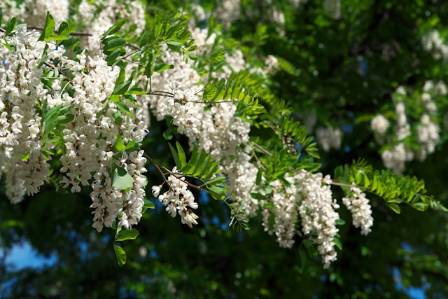
During its short blooming phase, the Black Locust produces highly noticeable and aromatic flowers. These appear in hanging clusters known as racemes, which may measure between 4 and 8 inches in length and drape gracefully from the branches.
Each individual blossom is small, pea-shaped, and typically white or creamy in color, often marked with a faint yellow accent on the upper petal.
One of the most distinctive features is the strong fragrance. The scent is rich and sweet, often compared to honey, vanilla, or citrus-like blossoms. It can be detected from a considerable distance and plays an important role in attracting pollinators, especially bees. Black Locust is widely valued as a nectar source for honey production.
When in full bloom, the tree’s canopy appears covered in cascading white floral clusters. However, this striking display is fleeting, and once the flowers fall, the fragrance quickly fades until the next season.
Differences Between Black Locust and Honeylocust
Although they share a common name, Black Locust and Honeylocust differ significantly in appearance and flowering behavior.
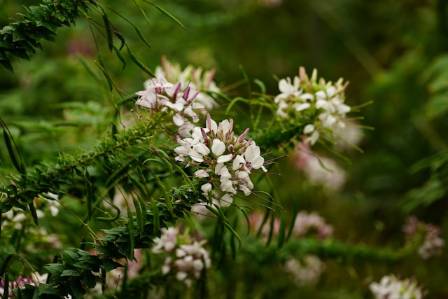
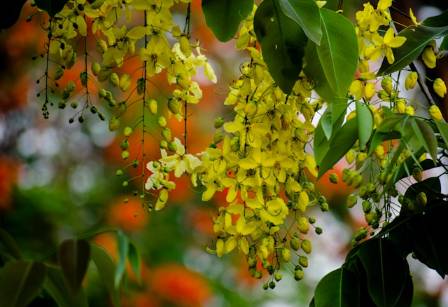
The Black Locust (Robinia pseudoacacia) is known for its abundant, fragrant white flower clusters that create a dramatic visual effect. In contrast, the Honeylocust (Gleditsia triacanthos) produces much smaller, less noticeable flowers that are greenish-yellow or pale cream in color. These blooms appear in small groups along the leaf bases and are not visually striking.
While Honeylocust flowers may have a mild scent, they do not compare to the strong fragrance of Black Locust blossoms, making them far less noticeable in the landscape.
Physical Identification Differences
Beyond flowers, the two species can also be distinguished by their structural traits.
Honeylocust trees often develop long, branched thorns on their trunks and branches, although many cultivated varieties are thornless. Black Locust trees, on the other hand, typically have smaller paired thorns that appear mainly near leaf stems on younger growth.
Their bark also differs: Honeylocust bark tends to be more loosely textured and shaggy, while mature Black Locust bark is darker, thicker, and deeply grooved.
Seed Pod Development
After flowering ends, both trees produce seed pods, a common trait of the legume family.
Black Locust forms relatively short, flat pods that are dark brown when mature. These pods are usually about 2 to 4 inches long and contain several hard seeds. They often remain attached to the tree through winter.
Honeylocust produces much larger seed pods, ranging from 12 to 18 inches in length. These pods are flat but often twisted or curved, starting green and turning reddish-brown as they mature. Their size and shape make them much more noticeable than those of the Black Locust.
More along this corridor
MID · en
What is a Coral Reef?
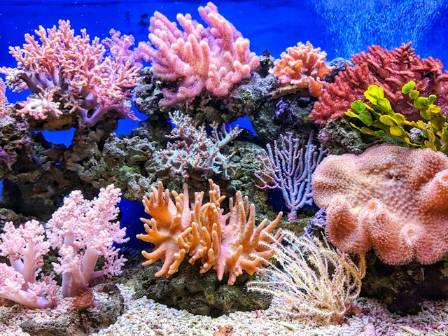
Coral reefs occupy only about 1% of the ocean floor, yet they provide a home for roughly a quarter of all marine species, which is why they are often called the “rainforests of the sea.” Beyond supporting incredible biodiversity, these ecosystems are essential for coastal communities around the world. They help reduce shoreline erosion, protect coastal areas from storm damage, and contribute billions of dollars each year through tourism, fisheries, and other economic activities.
MID · en
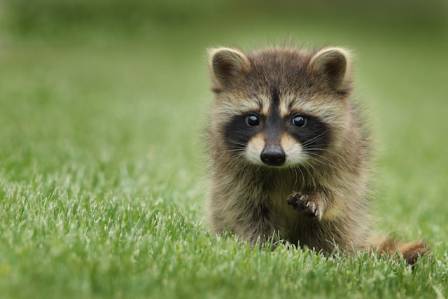
How to Draw a Raccoon
Raccoons are charming, playful creatures with their signature masked faces and bushy tails. They share some similarities with foxes — check out our fox drawing guide if you love woodland animals! If you’ve ever wanted to sketch a raccoon, you’re in the right place. This tutorial will guide you through easy steps to draw an adorable raccoon. Grab your pencil, and let’s begin!
MID · en
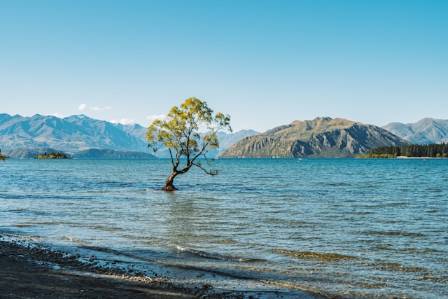
That Wānaka Tree: New Zealand’s Most Famous Tree
We all dream of becoming famous at some point. These days, you can try your luck through controversial reality shows, gain attention by doing ridiculous things online, or become well known because you genuinely excel at something. Another option is to simply be a partially submerged willow tree standing by itself in Lake Wānaka.
MID · en
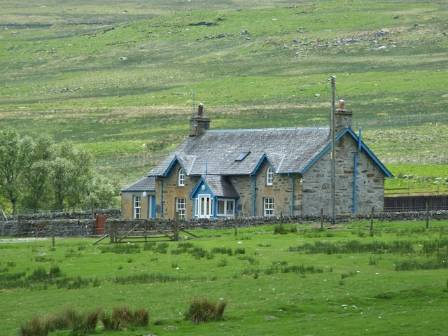
The Most Enchanting Cottages Around the World
Escape into a world where architecture sighs with the land and interiors whisper of quiet luxury. From rugged coastlines to secluded valleys, these six cottages and country escapes blend rustic charm with refined taste. Each retreat wears its own story—crafted with care, rooted in place, and designed to make you want to linger a little longer.
MID · en

Seven Stunning Coastal Roads Around the World
There is something unforgettable about being close to the ocean, especially when the journey itself becomes part of the adventure. Whether you are enjoying a smooth ride in a luxury SUV or experiencing the freedom of driving a convertible with the roof down, coastal roads offer some of the most spectacular scenery on the planet. From dramatic cliffs and endless sea views to winding routes through unforgettable landscapes, these seven coastal drives are perfect sources of inspiration for your next road trip.
MID · en
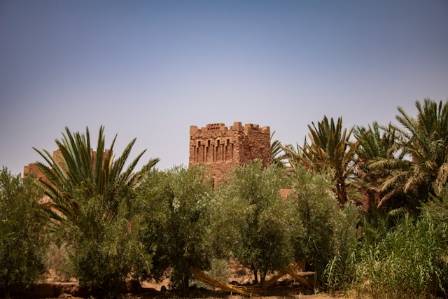
Morocco’s Little Switzerland: Ifrane & Azrou Cedar Forest Day Trip
Embark on a captivating day trip to Ifrane and the Azrou Cedar Forest, a refreshing escape into the heart of Morocco’s Middle Atlas Mountains that lives up to Ifrane’s nickname “Morocco’s Little Switzerland.” This carefully curated journey weaves together stunning natural landscapes, rich Berber culture, and moments of tranquility, guiding you through a charming alpine-style town, an ancient cedar forest, and scenic mountain vistas that make the region uniquely enchanting. Perfect for travelers seeking balance—whether you’re chasing wildlife, exploring cultural gems, or simply unwinding amid nature—this well-planned excursion promises a day of discovery and renewal.