Basic information & taxonomy

Corridor read

Basic information & taxonomy

Common names: Western rockhopper penguin (sometimes also lumped with “southern rockhopper penguin”) Scientific name: Eudyptes chrysocome (Forster, 1781)

N

Noah Davis

Temple note

Layer tip

The full corridor digest continues below along soft meter ticks.

Path

Temple Corridor

Common names: Western rockhopper penguin (sometimes also lumped with “southern rockhopper penguin”)
Scientific name: Eudyptes chrysocome (Forster, 1781)
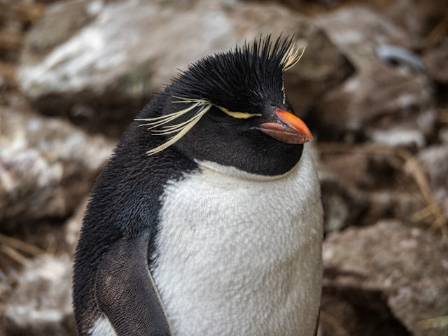
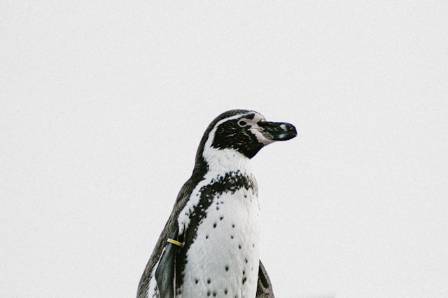
It is one of the “crested penguins,” characterized by prominent yellow crest feathers above the eyes.
There has been debate among taxonomists about how many distinct species or subspecies of rockhopper penguins there are. Some treat the Western form as distinct from the Eastern and Northern rockhoppers; others treat them all as subspecies of Eudyptes chrysocome.
  Within that framework, E. c. chrysocome is the “western” subspecies (i.e. the form breeding off South America) and E. c. filholi is the “eastern” or Indopacific subspecies.
  The northern rockhopper penguin, Eudyptes moseleyi, is genetically distinct and often treated as a separate species.

Description & size

Among the Eudyptes (crested) penguins, this is the smallest yellow-crested black-and-white penguin.
Size: ~ 45 to 58 cm in length (~18 to 23 inches)
Weight: generally 2.0 to 3.4 kg (4.4 to 7.5 lb), though some exceptional individuals weigh up to ~4.5 kg (≈9.9 lb)
Upper parts: slate-gray or dark; head, face and back dark; underparts white with sharp demarcation at throat.
Crest: The yellow “eyebrow” stripe starts about 1–2 cm above the gape, broadening into a wedge in front of the eye, and behind the eyes the crest feathers droop sideways.
Bill & eyes: The bill is orange-red. The eyes are red. The skin at the base of the bill is black (i.e. there’s no pale or fleshy skin there, which helps distinguish it from some related forms).
Legs & feet: Pink with black soles.
Immature birds: somewhat smaller, with greyer throat and less well developed crests.

Ecology, behaviour & diet

Habitat & distribution: Breeds in subantarctic islands off southern South America (e.g. Falkland Islands, islands off Patagonia). The “western” form’s stronghold is around the Falkland Islands.
Outside breeding season: individuals disperse widely into surrounding ocean waters.
Diet: Primarily crustaceans (krill, etc.), but also squid, octopus, small fish (lantern fish), mollusks, and cuttlefish.
Foraging & dives:   • They use both pelagic dives (shallower, in open water) and benthic dives (near the seafloor).   • Benthic dives can reach up to ~100 m (≈ 330 ft) depth.   • Dive duration: typical aerobic dives are limited to ~110 seconds; some dives may last up to ~180–190 seconds (i.e. pushing physiological limits)   • Females generally forage during the day, making multiple dives in trips lasting many hours. Occasionally they might forage at night, but nighttime dives tend to be shallower.   • They may range far: foraging trips up to ~157 km (≈ 98 miles) from the colony have been documented.
Locomotion on land: Unlike many penguins that slide (toboggan) on their bellies, rockhoppers “hop” over rocks and boulders, hence their common name.
Breeding & reproduction:   • They breed in colonies on cliffs, rocky shores, sometimes inland or up cliffs.   • Breeding season: September to November (in the Southern Hemisphere)   • Clutch size: usually two eggs are laid, but typically only one chick is successfully reared (the first egg often fails).   • Incubation: ~ 35 days   • After hatching: chicks are brooded for ~26 days before being left more independently.
Longevity: One known individual (“Rocky”) in captivity lived to ~ 29 years and 4 months (in a Norwegian aquarium).

Conservation status & threats

The global population is estimated at around 1 million pairs (i.e. ~2 million adult birds) for the rockhopper complex, with a large share belonging to the E. c. chrysocome (western) population.
Population trend: The western rockhopper (and rockhoppers generally) has experienced substantial declines — about a one-third drop over the last ~30 years (as of the time of the article)
Threats:   • Commercial fishing (competition for prey, bycatch)   • Oil spills and pollution in ocean waters
Status: Classified as Vulnerable by the IUCN.
Human interactions:   • Historically, indigenous peoples (e.g. the Yahgan people in Tierra del Fuego) hunted them for food.   • Today, their colonies attract ecotourism, which can have both benefits (awareness, protection) and risks (disturbance)   • In captivity / zoological settings: European zoos coordinate breeding programs; Drusillas Park in East Sussex holds the studbook for rockhopper penguins in Europe.

More along this corridor

MD

MID · en

Sea Otter Protection: A Key to Mitigating Climate Change Impacts on Arctic Marine Ecosystems

Sea Otter Protection: A Key to Mitigating Climate Change Impacts on Arctic Marine Ecosystems

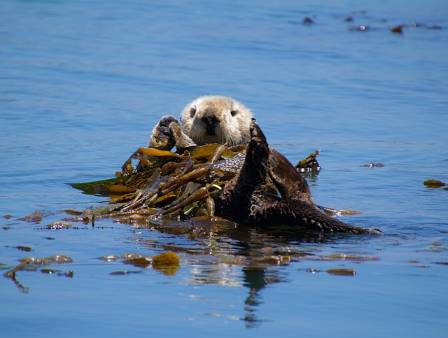
A groundbreaking study published in Science on September 11, 2020, reveals a critical link: the drastic decline of sea otter populations off Alaska’s Aleutian Islands since the 1990s has amplified climate change’s destructive effects on the region’s widespread calcareous algae reefs. Led by marine biologist Dr. Douglas Rasher from the Bigelow Laboratory for Ocean Science, the international research team—including scientists from GEOMAR Helmholtz Centre for Ocean Research Kiel—documented how the loss of this keystone predator, combined with ocean warming and acidification, threatens the survival of complex coastal ecosystems. GEOMAR’s expertise in uranium-thorium limestone dating was instrumental in supporting the study’s detailed ecological reconstructions.

MD

MID · en

The Role Of Manned Submersibles In An Autonomous Age

The Role Of Manned Submersibles In An Autonomous Age

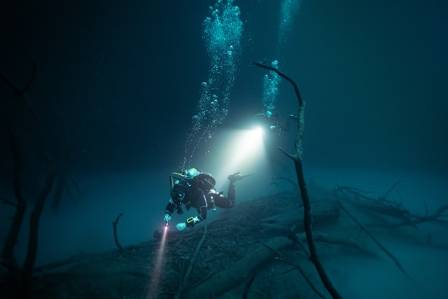
The world’s oceans are increasingly active with sophisticated underwater technologies working to reveal long-hidden mysteries. However, sixty years ago, Denise was a pioneering and singular creation of its time.

MD

MID · en

Home-Style Tamagoyaki

Home-Style Tamagoyaki

Spending weeks trying to perfect a recipe only to realize you’re out of your depth is a humbling experience. I had assumed making tamagoyaki, the Japanese rolled omelette, would be straightforward. I’d enjoyed it countless times in sushi restaurants, bento boxes, and even during trips to Japan.

MD

MID · en

Six Winter Scenes in Art

Six Winter Scenes in Art

Winter in the northern hemisphere brings short days, biting winds, frosty paths, and cozy knitwear. It marks the end of one year and the beginning of another, a season of reflection and transition.

MD

MID · en

10 Fakta Menarik Mengenai Ilustrasi dan Karakter Panda

10 Fakta Menarik Mengenai Ilustrasi dan Karakter Panda

Panda raksasa bukan hanya hewan yang menggemaskan di alam liar, tetapi juga telah menjadi subjek paling ikonik dalam dunia seni visual dan ilustrasi. Dari karakter kartun yang lucu hingga lukisan tinta tradisional, pesona visual mereka tak tertandingi. Berikut adalah 10 fakta menarik tentang bagaimana keunikan panda menginspirasi para seniman dan ilustrator di seluruh dunia!

MD

MID · en

Top 10 Most Beautiful Women in the World, Ranked by Science

Top 10 Most Beautiful Women in the World, Ranked by Science

Naming the most beautiful woman on Earth might sound subjective — after all, beauty lies in the eye of the beholder. Still, modern science has developed ways to analyze physical attractiveness using mathematical principles that offer some objective perspective. Dr. Meegan Gruber, a Florida-based board-certified plastic surgeon, explains that while beauty standards shift with culture and time, certain universal traits consistently appeal to human perception. “The way we define beauty is influenced by both societal norms and individual preferences,” she says. “But mathematics, like the Golden Ratio, has long been used to assess symmetry and proportion — key aspects of perceived beauty.”