Corridor read
Launch Vehicles: The Key to Space Exploration
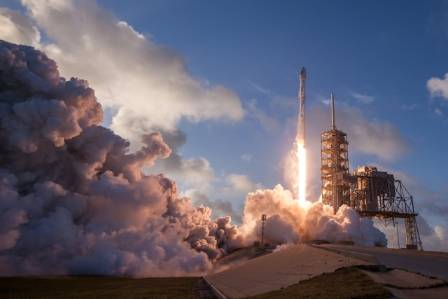
Launch vehicles are the fundamental hardware of spaceflight, providing the thrust needed to overcome Earth’s gravity and send payloads into space. This article introduces what launch vehicles are, how they evolved, and how they are used today, along with recent developments shaping their future.
Ava Quinn
Temple note
Layer tip
The full corridor digest continues below along soft meter ticks.
Path
Temple Corridor
Launch vehicles are the fundamental hardware of spaceflight, providing the thrust needed to overcome Earth’s gravity and send payloads into space. This article introduces what launch vehicles are, how they evolved, and how they are used today, along with recent developments shaping their future.
What Launch Vehicles Are and Why They Matter
A launch vehicle (often called a carrier rocket) is a rocket-powered system designed to carry payloads such as satellites, crew capsules, and spacecraft from Earth’s surface into space. Without them, access to orbit and beyond would not be possible, making them essential for science, communication, navigation, defense, and exploration missions.
Early Development and Historical Background
Modern rocketry traces its origins to early 20th-century experiments. One key milestone came in 1926, when Robert H. Goddard successfully launched the first liquid-fueled rocket.
The space age officially began in 1957 with the Soviet launch of Sputnik 1, followed by the United States launching Explorer 1 in 1958. From that point onward, launch systems rapidly improved through advances in propulsion, materials, and guidance systems, leading to today’s highly sophisticated rockets.
Main Categories of Launch Vehicles
Launch systems are generally grouped by size, purpose, and reusability:
Expendable launch vehicles (ELVs)
These rockets are used once and discarded after flight. They remain widely used due to lower cost and simpler design for many missions.
Reusable launch vehicles (RLVs)
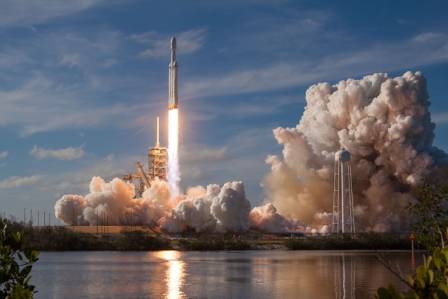
These are designed to return and fly again, reducing long-term launch costs. A well-known example is SpaceX Falcon 9.
Heavy-lift launch vehicles
Built for very large payloads and deep-space missions, such as NASA Space Launch System.
Small-lift launch vehicles
Designed for lighter payloads like CubeSats and small satellites, often used for rapid or low-cost missions.
Key Design Factors in Rocket Development
Designing a launch vehicle requires balancing multiple engineering constraints:
Payload capacity determines how much mass can be delivered to orbit.
Mission orbit defines the required speed and energy.
Propulsion systems provide thrust and overall performance.
Structural strength ensures the rocket survives extreme launch forces.
Guidance and navigation systems control trajectory and accuracy.
Together, these factors determine whether a rocket can successfully complete its mission.
Materials and Manufacturing Approaches
Launch vehicles rely on advanced materials to maximize strength while minimizing weight. Common choices include:
Aluminum alloys for lightweight structural frames
Carbon-fiber composites for fairings and interstage structures
Titanium alloys for high-stress and high-temperature components
Manufacturing methods include precision machining, welding, and composite layering, all of which ensure tight tolerances and reliability under extreme conditions.
Rocket Propulsion Systems
The engine systems that power launch vehicles are critical to performance. Main types include:
Liquid rocket engines, which mix fuel and oxidizer during flight for controlled thrust.
Solid rocket motors, which burn pre-packed propellant for high initial power.
Hybrid systems, combining aspects of both liquid and solid propulsion.
where thrust depends on mass flow rate, exhaust velocity, and pressure differences.
Modern Uses of Launch Vehicles
Satellites and Space Exploration
Launch vehicles are essential for placing satellites into orbit and sending probes beyond Earth. Examples include:
Ariane 5 for geostationary satellites
SpaceX Falcon 9 for commercial and scientific payloads
NASA Space Launch System for lunar missions
Human Spaceflight
Crewed missions also depend on reliable rockets:
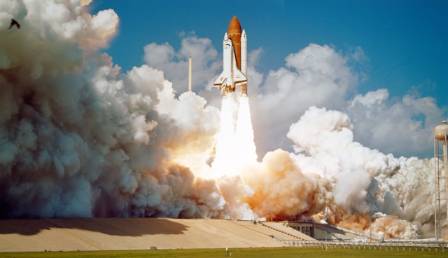
NASA Space Shuttle transported astronauts and cargo to low Earth orbit.
SpaceX Crew Dragon carries astronauts to the International Space Station.
Boeing CST-100 Starliner supports human spaceflight missions to orbit.
Commercial Space and Future Missions
The growth of private spaceflight is accelerating innovation. New systems under development include:
SpaceX Starship designed for missions to the Moon and Mars.
Blue Origin New Glenn for commercial and scientific payloads.
Virgin Galactic SpaceShipTwo for passenger space tourism.
These vehicles represent a shift toward reusable, lower-cost access to space.
Conclusion
Launch vehicles remain the core infrastructure of space exploration. From early experimental rockets to modern reusable systems, they have continually evolved through improvements in engineering, propulsion, and materials. As space activity expands into commercial travel and deep-space exploration, launch technology will continue advancing toward greater efficiency, reusability, and capability.
More along this corridor
MID · en

Which chair is good for your back?
A comfortable and supportive chair plays an important role in maintaining your overall comfort and health. Whether you are working in an office, studying at home, or simply relaxing, having the right seating can make a major difference.
MID · en

Top 5 Waterfalls
Waterfalls have always fascinated me, whether they are tiny streams cascading gently over a handful of rocks or enormous rivers crashing down from great heights. I have never had any desire to experience a waterfall from inside a barrel, though. I am much happier appreciating their beauty and raw power safely from solid ground.
MID · en

10 Fascinating Insights into Hummingbird Behavior
Hummingbirds continue to astonish scientists and bird enthusiasts with their remarkable adaptations and intriguing behaviors. These tiny aerial acrobats possess unique characteristics that set them apart from other avian species. Here are ten captivating aspects of their behavior that reveal the extraordinary nature of these feathered wonders.
MID · en

Shenzhen's Ping An Finance Center: World's 4th Tallest Building
The Council on Tall Buildings and Urban Habitat (CTBUH) has officially recognized the completion of the Ping An Finance Center in Shenzhen, China, according to its criteria for tall buildings. Rising 599 meters, or 1,965 feet, above the city, the tower was recognized at the time as the second-tallest building in China and the fourth-tallest building in the world, following the Burj Khalifa, Shanghai Tower, and Makkah Royal Clock Tower.
MID · en

Discover 7 most attractive Dark Sky Campgrounds for Stargazing
Escape the city lights and campground glow for an unparalleled night sky experience at these exceptional dark sky campgrounds. With nearly 200 International Dark Sky Places globally committed to preserving the celestial views, these spots offer an immersive stargazing experience for RVers. Let's explore the top destinations:
MID · en

Top Tips for Leaf Peeping in New River Gorge
With more than 150 varieties of deciduous trees, New River Gorge transforms into a spectacular display of red, orange, gold, and yellow every fall. The forests, cliffs, and valleys create one of the most impressive autumn landscapes in the Appalachian region. Here are some helpful suggestions for making the most of your fall visit.